Love or Attachment
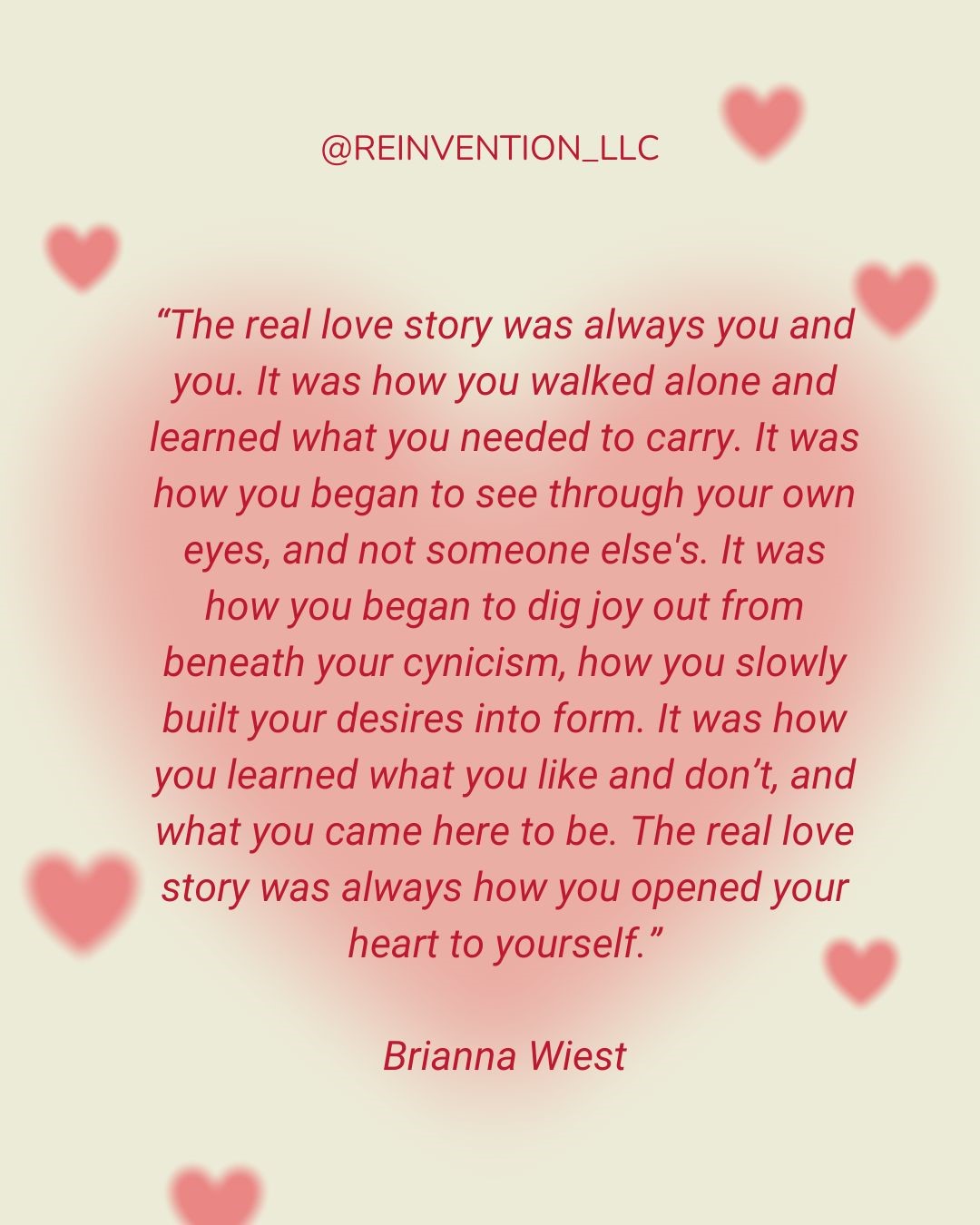
February is known as “Love Month.” The focus on relationships is either celebrated or dreaded depending on your status. Love focuses on another person’s well-being, growth, freedom, and individuality. Attachment is conditional and focused on personal safety, comfort, or validation. Is “falling in love” more about how the other person makes you feel about yourself?
Think about your relationships. Why were you drawn into them? What is the origin story of how you met, what formed the bond? Not just romantic relationships. Think about friendships, social groups, and family. How do they provide connection, comfort, or safety? What percentage of these relationships are mutual versus conditional?
Social connection is one of our five basic needs, and we form bonds with people in a variety of ways. It is complex. We may have several different attachment types depending on the relationship. Attachment theory is a way to categorize characteristics of our personality traits. These are rooted in childhood development. How we navigate milestones – positive, negative, or not at all – impacts the strengths or identity issues that follow us into the future. We are hardwired to repeat patterns we learn from an early age for survival, brain efficiency, psychological comfort, genetics, and our environment.
Erickson’s Psychosocial Development Theory
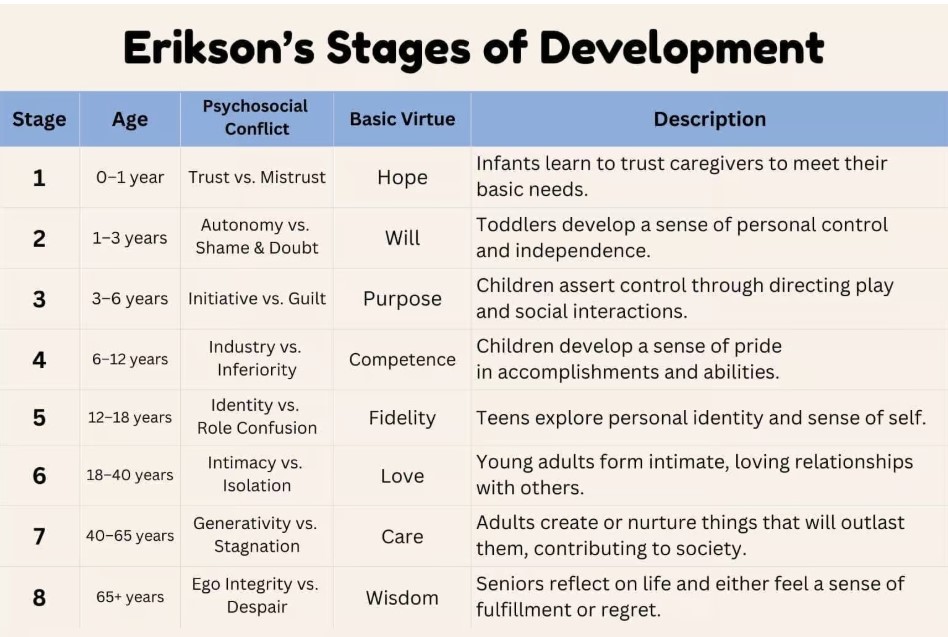
Roughly 30% of people experience changes to their attachment style through self-work, therapeutic intervention, healthy relationships or life experiences and trauma. My attachment style has evolved. It is not the same as the one I formed in childhood, the one in early adulthood when I got married, nor the one 25 years later when I was divorced. I have different friendships today than the ones I had in early adulthood or the situational ones that come through school, activities, and through friends of others.
Attachment theory is something I enjoyed working on personally. I wanted to understand my past relationships better so I could change patterns instead of repeating them. The biggest discovery was that I don’t need another person (parent, partner, friend) to be involved in helping me heal or understand the past. It’s my relationship with myself that is at the core of healing, changing, and connecting with others authentically.
Attachment Styles

In February, I hope you embrace self-love and self-awareness. Internal work is not solo work, and navigating our thoughts, feelings, and past experiences requires support. Please seek counseling, support groups, or a trusted friend to gain insight. We don’t recover alone and we don’t thrive without supportive connections.
@Reinvention LLC, 2026, All Rights Reserved
For more reading
Attachment Style – Love vs Attachment (Betterhlep.com)
“Life is in the Transitions” offers personal stories and insight into looking at change.
Michelle Mays specializes in Betrayal Trauma